Best Aluminum Square Tubes for Every Project Needs?
When it comes to construction and DIY projects, the right materials make a significant difference. Aluminum square tubes stand out as versatile, lightweight, and durable options. These tubes are ideal for a wide range of applications, such as framing, supports, and even artistic projects. The geometric shape ensures stability, which is essential for structural integrity.
Choosing the best aluminum square tubes does require some thought. There are various factors to consider, including thickness, dimensions, and weight capacity. Each project may need a different specification, and failure to match them could lead to structural issues. This exploration will highlight the features that make certain aluminum square tubes suitable for specific needs.
On the surface, aluminum square tubes seem simple. Yet, selecting the right type can be a challenge. Sometimes, even experienced builders overlook critical details. Understanding the characteristics of these materials can avoid costly mistakes. Let's delve deeper into the world of aluminum square tubes and discover what makes them a choice you can rely on for any project.

Understanding Aluminum Square Tubes: Properties and Benefits
Aluminum square tubes are popular for their
lightweight and durable nature. They resist corrosion, making them ideal for various projects.
These tubes come in different sizes and thicknesses, allowing for flexibility in design.
Designers and builders appreciate this adaptability, yet not every project requires aluminum.
Sometimes, a sturdier material might be more
appropriate.
The properties of aluminum square tubes include excellent thermal
conductivity and recyclability. This
makes them environmentally friendly and energy-efficient. Moreover, they have a clean finish
that looks polished and modern. However, the cost
can be a factor. Many budget-conscious projects may shy away from aluminum, seeking cheaper
alternatives.
Additionally, working with aluminum can pose challenges. It can be difficult to cut and weld.
Improper handling might lead to deformation. Users should consider their tools and skills before
starting a project. Understanding these details is crucial for success. Balancing
aesthetics and practicality
is often complex, requiring careful thought.
Types of Aluminum Square Tubes: Material Grades and Varieties
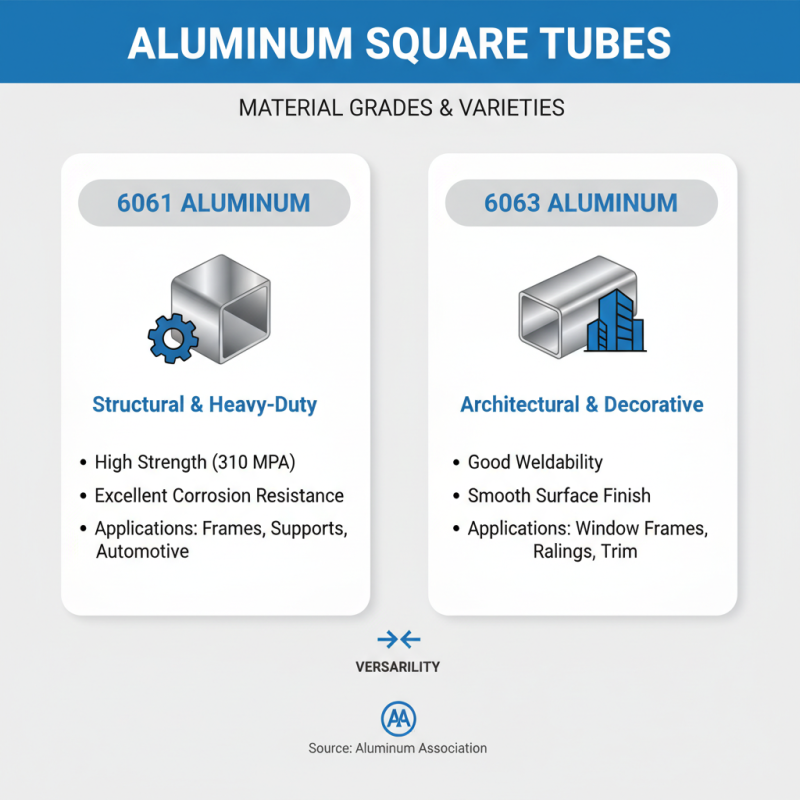
When selecting aluminum square tubes, understanding the types available is essential. Aluminum square tubes come in various material grades, each with unique characteristics. Common grades include 6061 and 6063, widely used for structural and architectural applications. According to the Aluminum Association, 6061 is strong and offers good corrosion resistance, making it suitable for heavy-duty work. Its tensile strength reaches 310 MPa, which is impressive for construction purposes.
In contrast, 6063 aluminum offers better finish and is more malleable. It's often seen in decorative fixtures and complex shapes. However, its tensile strength is lower, around 240 MPa. This difference highlights the importance of choosing the right grade for specific needs. Additionally, one must consider the wall thickness, which impacts the overall performance of the tubes. Thicker walls provide better durability but can also increase weight, which may not be ideal for all projects.
There are also various alloy forms such as T4 and T6 tempering. T6 has been heat-treated for maximum strength, suitable for high-stress environments. However, manufacturing tolerances in aluminum tubes also present challenges. Variations can affect joint compatibility and structural integrity. Recognizing these specifics can lead to better project outcomes but also requires careful planning and selection.
Applications of Aluminum Square Tubes in Different Industries
Aluminum square tubes are versatile materials used in many industries. In the construction sector, they serve as structural supports due to their strength and lightweight properties. Builders favor aluminum tubes because they resist corrosion. They excel in challenging environments, lasting longer than other materials.
In the automotive industry, aluminum square tubes are used for framing and chassis components. Their reduced weight improves fuel efficiency and enhances performance. Manufacturers appreciate their adaptability in design and ease of fabrication. However, the welding process can be tricky. It requires skilled labor to ensure proper joins without weakening the tube.
The electronics industry also benefits from aluminum square tubes. They provide excellent housing for devices. Their thermal conductivity helps manage heat dissipation efficiently. Yet, aesthetics can be a potential drawback. An unfinished surface may not appeal to designers seeking a polished look. Finding the balance between functionality and appearance can be challenging.
Applications of Aluminum Square Tubes in Different Industries
This chart illustrates the applications of aluminum square tubes across various industries, showcasing their versatility and importance.
Choosing the Right Aluminum Square Tube for Your Project
When choosing the right aluminum square tube for your project, it's essential to consider your specific needs. Aluminum square tubes come in various sizes and alloys. For instance, 6061 and 6063 are popular alloys, known for their excellent strength-to-weight ratios. According to industry reports, the global aluminum market is projected to grow at a CAGR of 4.0% from 2020 to 2027. This growth reflects an increasing demand for lightweight materials across several sectors.
Selecting the right size is critical. Common dimensions range from 1 inch to 4 inches, depending on the application. Projects requiring structural support may need larger diameters, while decorative uses can opt for smaller sizes. However, sourcing the right size can be challenging. Sometimes, manufacturers have limited inventory, leading to delays. It's essential to verify availability before starting your project.
Strength is also vital when making your choice. Different aluminum alloys offer various levels of tensile strength and corrosion resistance. Understanding these properties helps you avoid mistakes that could compromise your project. For example, a weak connection could lead to structural failure. Always prioritize safety and factor in potential load conditions when selecting your materials.
Installation and Maintenance Tips for Aluminum Square Tubes
When working with aluminum square tubes, proper installation is crucial. Ensure the area is clean before starting. Dust and debris can affect the bonding of materials. Use protective gear like gloves and goggles to prevent injuries. Align the tubes carefully to avoid unnecessary stress on joints. Even a slight misalignment can lead to failure in the long run.
Maintenance is also essential for longevity. Regularly inspect your aluminum square tubes for signs of wear and corrosion. Touching the surface with dirty hands can lead to oxidation. If you notice any discoloration, consider cleaning it promptly. Using a soft cloth and mild detergent works well. Avoid abrasive cleaners that can scratch the surface and compromise integrity.
Sometimes, projects don’t go as planned. You may find that certain cuts are not precise. Take the time to measure multiple times before making cuts. Rework can be time-consuming but is often necessary to ensure quality. Learning from mistakes is part of the process. Each installation teaches you something new about the material and your skills.
Best Aluminum Square Tubes for Every Project Needs - Installation and Maintenance Tips for Aluminum Square Tubes
| Project Type |
Recommended Size (inches) |
Weight Capacity (lbs) |
Installation Tips |
Maintenance Tips |
| Furniture Construction |
1x1 |
150 |
Use appropriate screws and brackets for stability. |
Clean with mild soap and avoid harsh chemicals. |
| Structural Support |
2x2 |
300 |
Ensure proper alignment and weld where necessary. |
Inspect regularly for signs of wear or corrosion. |
| Fencing |
1.5x1.5 |
200 |
Use concrete for posts and check for level. |
Paint with a weather-resistant finish. |
| Automotive Parts |
2.5x2.5 |
400 |
Ensure all parts fit together tightly. |
Lubricate moving parts and check for rust. |
| Decorative Projects |
1x1 |
100 |
Use brackets to enhance aesthetic appeal. |
Regularly wipe down to maintain shine. |