How to Choose the Right Aluminum L Shape Angle for Your Project?
Choosing the right Aluminum L Shape Angle for your project is crucial. This decision will impact your build quality and structural integrity. According to the Aluminum Association, the use of aluminum in construction has increased by 20% over the last decade. This trend highlights the importance of selecting the proper materials.
Aluminum L Shape Angles are versatile and widely used in various applications. They offer strength and lightweight properties. Yet, not all angles are created equal. Factors such as thickness, finish, and alloy composition can affect performance. Inaccurate choices can lead to project failures, increased costs, and safety risks.
Many professionals cite common pitfalls in material selection. These include overlooking load requirements and not considering environmental factors. As the market evolves, staying informed about advancements in aluminum technology becomes essential. Proper selection is not just about immediate needs, but about long-term sustainability and performance.
Understanding the Basics of Aluminum L Shape Angles
When embarking on a project that requires aluminum L shape angles, it's crucial to grasp the basics. Aluminum L shape angles are versatile and widely used in construction, furniture-making, and various DIY tasks. They come in different sizes and thicknesses, designed to provide structural support and stability.
It's important to evaluate the dimensions you need for your project. Measure the length and angle precisely. A small mistake in measurement can lead to weak joints or poorly fitted structures. Consider the load your project will bear. Thicker angles can offer more strength but may also add weight.
Tips: Always check the finish of the aluminum. A smooth surface can prevent corrosion, enhancing durability over time. If you're new, practice cutting and fitting smaller pieces. This builds confidence before tackling larger tasks. Reflect on the project design; are the angles truly fitting your needs? Sometimes, a different material suite could perform better. Balancing functionality with aesthetics can be challenging and requires thoughtful consideration.
Identifying the Requirements of Your Project
When embarking on a project that requires aluminum L shape angles, understanding your specific requirements is crucial. The design and structural needs will dictate the size, thickness, and length of the angles. For example, a project involving heavy shelving might require thicker, more robust angles compared to a lightweight partition. Consider the load and stress factors that the angles will endure. An underestimation here could lead to structural failure.
Take time to assess the environment where these angles will be installed. Will they face moisture or extreme temperatures? Such conditions can affect the longevity and performance of aluminum. Visualizing the final application helps in making informed decisions about the finish and treatment of the angles. It's easy to overlook the impact of environmental factors, leading to regrettable choices later.
Engaging with professionals for advice can provide valuable insights, but it's essential to remain diligent. Not every suggestion will align with your vision or practical needs. Experimenting with different styles and dimensions may yield unexpected but optimal outcomes. Crafting a project that balances form and function requires a keen eye for detail and a willingness to refine your ideas as you go.
How to Choose the Right Aluminum L Shape Angle for Your Project?
| Project Requirements |
Aluminum L Shape Angle Dimensions |
Thickness (mm) |
Weight (kg/m) |
Common Applications |
| Lightweight structures |
20mm x 20mm |
1.5 |
0.78 |
Sign frames, shelves |
| Moderate load-bearing |
30mm x 30mm |
2.0 |
1.2 |
Wall brackets, furniture framing |
| Heavy-duty frames |
50mm x 50mm |
3.0 |
2.5 |
Industrial machinery, construction supports |
| Custom projects |
40mm x 40mm |
2.5 |
1.8 |
Unique architectural designs |
Evaluating Different Sizes and Thicknesses of L Shape Angles
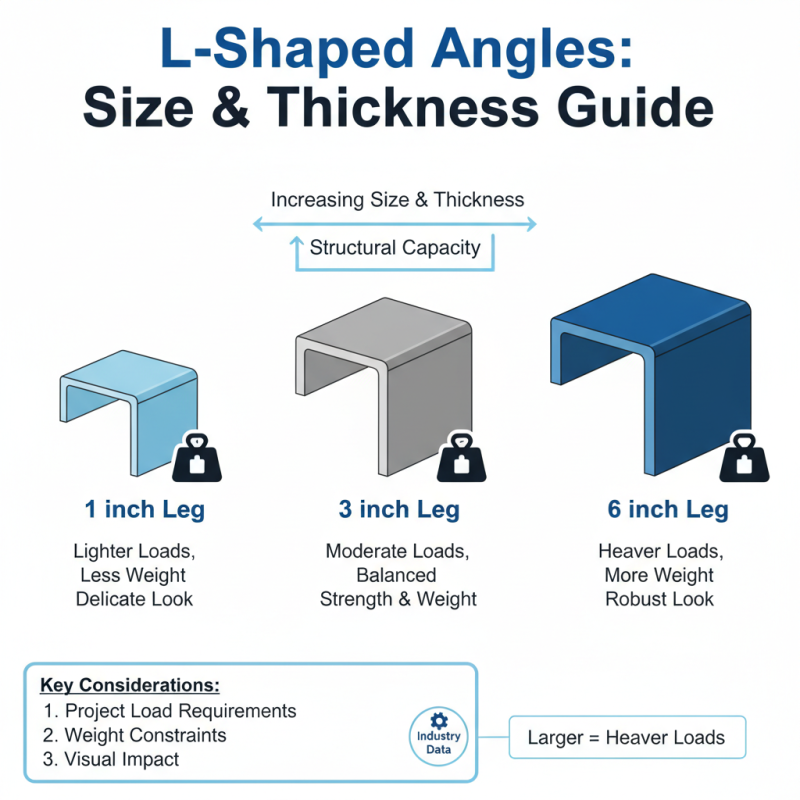
When evaluating L shape angles for your project, size and thickness are crucial. L shape angles come in different sizes, typically ranging from 1 inch to 6 inches in leg length. The chosen size affects the structural capacity and overall aesthetics of your project. According to industry data, larger angles can handle heavier loads, but they may add unnecessary weight.
Thickness is another important factor. Common thicknesses for aluminum L shapes vary from 1/8 inch to 1 inch. Thicker angles provide greater strength and durability, especially in outdoor applications. A report by the Aluminum Association noted that a 1-inch thick angle significantly increases load-bearing capacity compared to a 1/8-inch version. However, increased thickness can lead to higher costs and difficulty in handling.
Assessing your project requirements is key. Will the angle face substantial loads? If so, prioritize strength. If not, choose based on budget and workability. Visualizing the end result matters. Will the angle blend well into your overall design? Thoughtful evaluation can prevent future regret. Balancing size, thickness, and aesthetics is vital for the success of your project.
Comparing Material Strength and Durability for Your Needs
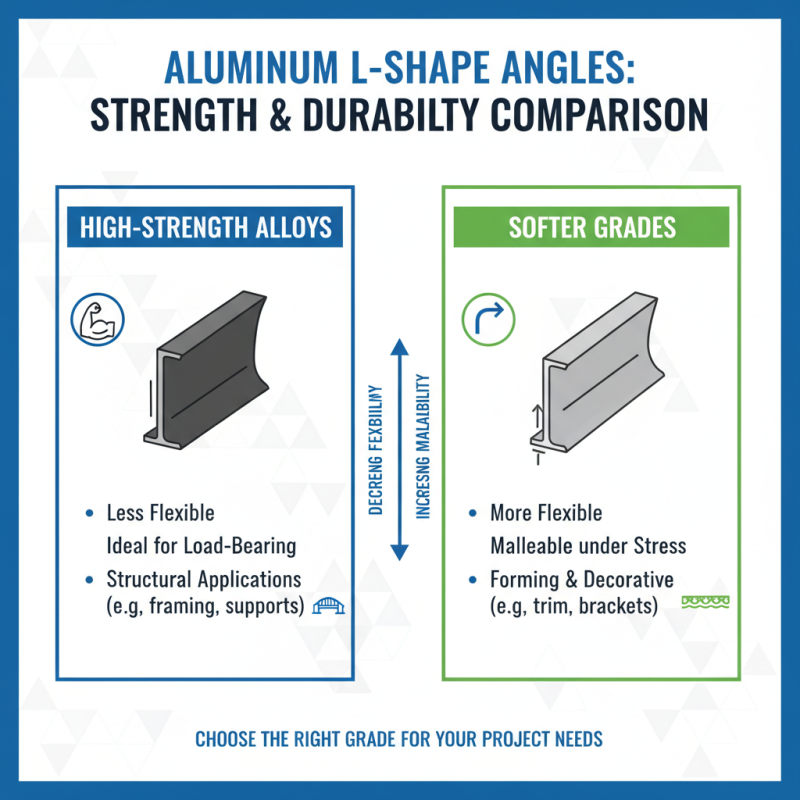
When it comes to selecting an aluminum L shape angle, understanding material strength and durability is crucial. Aluminum is lightweight yet remarkably strong, making it an excellent choice for various construction projects. Different grades of aluminum offer different mechanical properties. For instance, higher strength alloys are less flexible, while softer grades may bend under stress.
Tips: Always consider the environment where the aluminum angle will be used. Will it face moisture or corrosion? If so, look for corrosion-resistant options, like anodized aluminum.
Durability is another key factor. In some applications, such as in outdoor settings, exposure to various elements can affect the material's lifespan. Factors like thickness and alloy type will significantly impact how well the aluminum withstands stress over time. It's essential to analyze the specific requirements of your project.
Tips: Test a small piece of aluminum in your project conditions before committing to larger purchases. This can help you observe how it holds up, ensuring you make the right choice. Ensure your selections reflect a balance between strength and weight for optimal performance.
Exploring Finishing Options and Their Impact on Performance
When choosing the right aluminum L shape angle for your project,
finishing options are crucial. Finishing not only enhances appearance but also affects performance.
Different finishes can improve corrosion resistance, durability,
and overall functionality. For instance, anodized surfaces
provide an excellent protective layer. This is particularly important in outdoor environments.
Consider powder coating as well. It offers vibrant colors
and long-lasting protection. However, it may not adhere well to surfaces with heavy abrasion.
Each finishing method has trade-offs. Aesthetic appeal is
essential, but functionality must not be overlooked. Choosing the wrong finish could lead to
premature wear and tear.
Evaluating the specific needs of your project will guide your decision. Environmental conditions,
load-bearing requirements, and visual preferences all influence the best choice. Testing small samples
can also help identify performance issues before full-scale application. It’s essential to balance
aesthetic and functional needs.
Reflecting on these factors will enhance project success.