Choosing the right window system affects comfort, energy use, and long-term building performance. Insulated Aluminium Window Profiles offer a practical balance between structural strength and thermal control. Their aluminium frames resist warping, corrosion, and daily weather exposure. With a thermal break between the inner and outer sections, they reduce heat transfer through the frame. This detail matters in homes, offices, and coastal buildings.
Performance depends on more than the material itself. Profile depth, insulation design, glazing type, seals, and installation quality all influence results. A well-designed frame can support large glass panels while maintaining a clean, narrow appearance. On a cold morning, the interior frame should feel less like a metal heat sink. In warmer climates, it can help reduce unwanted heat entering around the window edges.
Small details matter.
In professional project reviews, reliable suppliers provide tested thermal values, air-tightness data, water resistance results, and structural ratings. These documents help architects and buyers compare systems fairly. However, no profile solves every building problem. Poor installation can create drafts, condensation, or weak water protection. That limitation deserves honest attention. Choosing Insulated Aluminium Window Profiles should therefore involve climate analysis, building orientation, maintenance expectations, and local performance requirements. A reputable manufacturer should explain these factors clearly, not rely only on attractive product images. When design evidence, verified testing, and skilled installation work together, aluminium windows can deliver durable comfort and dependable everyday performance.
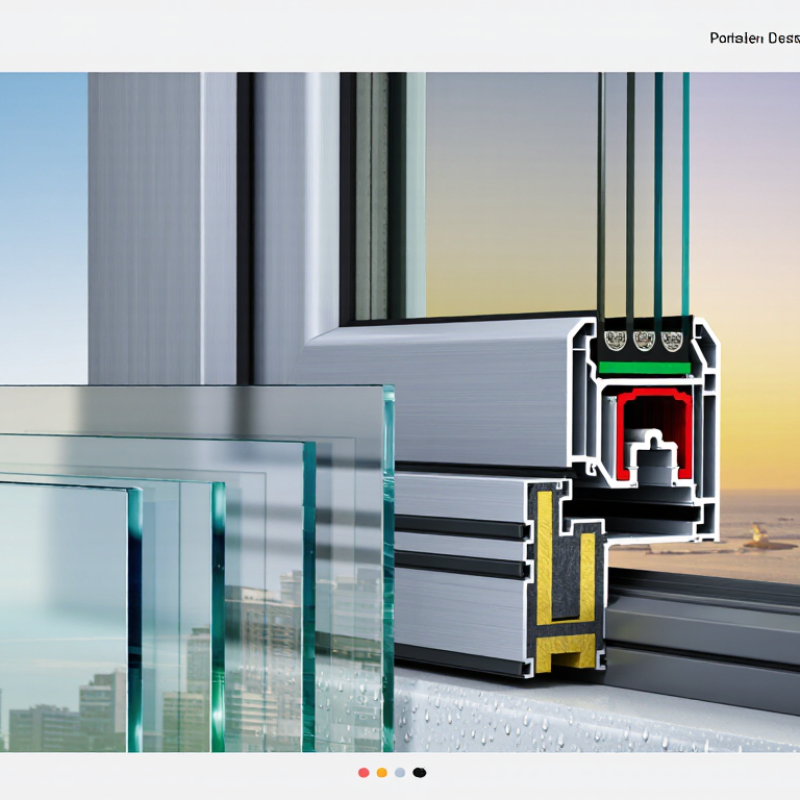
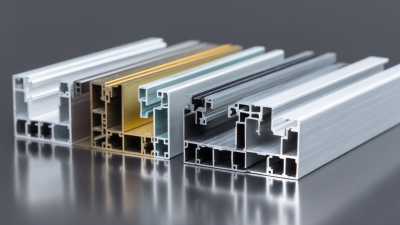
Insulated aluminium window profiles are aluminium frames designed to reduce heat transfer between indoors and outdoors. They are often called thermally broken profiles. A low-conductivity polyamide barrier separates the inner and outer aluminium sections, interrupting the metal’s natural thermal bridge. Insulating chambers, gaskets, and suitable glazing complete the window system. The frame is not the insulation itself. It is a carefully engineered path that limits heat movement.
This matters because windows can influence comfort and energy demand. The U.S. Department of Energy’s Energy Saver guidance estimates that windows account for about 25–30% of residential heating and cooling energy use. However, performance depends on the complete assembly. Frame depth, glass specification, air leakage, spacer design, and installation quality all affect the final result. EN ISO 10077-2 is commonly used to calculate window thermal transmittance, or U-value. Lower values generally indicate better insulation.
A practical detail is the continuous barrier around corners and joints. A small interruption can create a cold spot, causing condensation near the frame. Installers must also align the frame correctly and seal the perimeter without compressing gaskets excessively. Insulated aluminium profiles offer strength, slim sightlines, and durable finishes, but they are not magic. Poor drainage or careless installation can weaken an otherwise strong design. The honest assessment should come from tested whole-window performance, not the profile description alone.
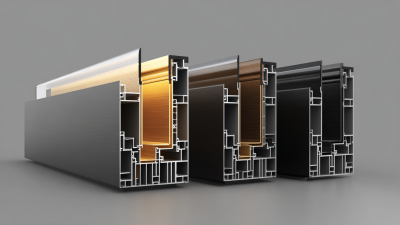
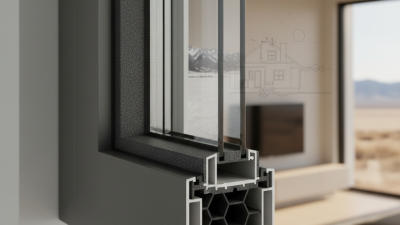
Aluminium frames are strong, slim, and durable, but ordinary aluminium transfers heat quickly. Insulated profiles solve this problem with a thermal break. This separating layer, often made from reinforced polyamide, divides the inner and outer aluminium sections. Heat then travels through a longer, less conductive path.
Inside the profile, multiple chambers can slow heat movement and reduce cold surfaces near the room. Quality gaskets also limit air leakage around the sash. The result is a warmer interior edge and more stable indoor comfort. However, the frame is only one part of the system. Glass performance, spacer design, drainage, and installation accuracy matter too. A small fitting gap can weaken an otherwise efficient window. No frame is perfect.
Tips: Check the profile’s thermal-break depth, chamber design, and documented U-value. Ask how the corners are joined and sealed. On site, inspect alignment and compression around the gaskets. Poor installation can create drafts, condensation, and disappointing energy results. It is easy to focus on attractive slim lines. That choice may need reconsideration if the local climate is cold or humid.
Why Choose Insulated Aluminium Window Profiles?
Insulated aluminium window profiles reduce heat transfer through the frame. Their thermal break separates the inner and outer aluminium sections. This helps keep warm air indoors during winter and outdoor heat away in summer. The result can be steadier room temperatures and lower heating or cooling demand.
Energy performance depends on more than the frame. Double or triple glazing, low-emissivity coatings, warm-edge spacers, and accurate seals also matter. A well-insulated profile may still perform poorly if installation leaves small gaps around the opening. On site, installers often find that poorly sealed corners cause noticeable draughts. That detail is easy to overlook. It should not be.
Tips: Compare the complete window’s U-value, not only the frame’s rating. Ask for test documents from a qualified supplier. Check whether the design suits your local climate and exposure. Inspect drainage paths, gasket compression, and corner joints before finishing the interior. Clean installation improves airtightness, but it cannot correct an unsuitable specification. Remember that aluminium profiles need careful detailing near cold masonry, where condensation may still appear. A thermal camera can help identify weak areas after installation. Small detail, big effect.
| Energy-Efficiency Dimension | Typical Non-Insulated Aluminium Profile | Typical Insulated Aluminium Profile | Energy-Efficiency Benefit |
|---|---|---|---|
| Frame thermal transmittance (Uf) | Typically about 5.0–7.0 W/m²·K or higher | Commonly about 2.0–3.5 W/m²·K, depending on the thermal-break design | Lower heat flow through the frame and reduced heating or cooling demand |
| Thermal-break material | Continuous aluminium path between the inside and outside surfaces | Low-conductivity polyamide or another engineered insulating barrier separates the aluminium sections | Interrupts the main conductive heat path while preserving aluminium’s structural strength |
| Whole-window U-value (Uw) | Often higher because the frame contributes more heat loss | Can reach approximately 0.8–1.6 W/m²·K with suitable low-emissivity double or triple glazing | Improves the overall window thermal performance; the final value depends on frame, glazing, spacer, size and configuration |
| Interior surface temperature | The inside frame surface can become noticeably colder during winter | Generally warmer under the same indoor and outdoor conditions | Improves thermal comfort and helps reduce the risk of surface condensation |
| Thermal bridging | Higher linear heat flow at the frame and junctions | Reduced when the thermal break is continuous and correctly connected at corners and joints | Supports better insulation continuity around window openings |
| Air leakage and draught control | Performance depends mainly on seals, hardware, fabrication and installation quality | Thermal insulation is commonly combined with multi-chamber gaskets and compression seals | A properly fabricated and installed window can reduce uncontrolled air exchange and associated energy loss |
| Heating and cooling load | Greater conductive heat loss in cold weather and heat gain in hot weather | Lower conductive transfer through the frame; glazing and shading still have a major influence | May reduce HVAC energy use, although actual savings vary with climate, orientation, window area, glazing and building operation |
| Solar-control compatibility | Can accommodate solar-control glazing, but the frame remains a thermal weak point | Can be paired with low-emissivity, solar-control or triple glazing | Allows the complete window system to be designed for both winter heat retention and summer solar control |
| Condensation resistance | Higher likelihood of cold-frame condensation in humid indoor environments | Improved resistance when the frame, glass edge, spacer and installation are correctly designed | Helps protect finishes and supports a more stable indoor environment |
| Durability and sustainability | Aluminium is durable and recyclable, but it does not provide a thermal break by itself | Combines durable aluminium with an insulating barrier; aluminium can be recycled at the end of service life | Supports long service life and lower operational energy use; total environmental impact also depends on manufacturing and recycled content |
Note: The values shown are indicative industry ranges rather than guaranteed product ratings. Certified performance should be verified using the tested Uf and Uw values for the complete window assembly under the applicable local standard.
Why Choose Insulated Aluminium Window Profiles?
Insulated aluminium window profiles use a thermal break between the inner and outer metal sections. This reduces heat transfer through the frame. In practice, a well-made profile feels less cold beside the glass during winter. It can also limit condensation around the frame. However, performance depends on the complete window system, not aluminium alone. Certified U-values, accurate installation, and suitable glazing deserve careful checking.
Compared with uPVC, aluminium usually offers slimmer sightlines and stronger support for large panes. It also resists warping, swelling, and regular repainting. Timber feels warmer and adds natural character, but it needs more maintenance in damp or exposed locations. Steel can provide excellent strength, although it often requires stronger thermal protection and may cost more. Aluminium is a practical middle ground.
Not always the best choice.
A poorly fitted aluminium window can still create drafts and cold edges. I have seen attractive frames underperform because insulation was compressed unevenly during installation. The finish may also scratch, and repairs can be less simple than replacing a timber component. For coastal buildings, corrosion-resistant finishes and suitable hardware are important. A reliable decision should compare frame depth, thermal-break design, glazing, drainage, maintenance, and local climate together.
Why Choose Insulated Aluminium Window Profiles?
Choosing an insulated aluminium window profile should begin with the building, not the catalogue. Consider the local climate, room orientation, and expected indoor comfort. A thermally broken profile can reduce heat transfer through the frame. However, the frame alone does not determine window performance. Glass specification, spacer design, seals, and installation quality matter just as much.
Check the profile’s declared U-value and ask how it was tested. Compare the complete window system, rather than one attractive technical figure. In cold regions, look for effective thermal breaks and strong condensation control. In hot climates, consider solar exposure, glazing selection, and shading. Wind pressure also matters, especially on tall buildings or coastal sites. Drainage paths should be clear and accessible. A poorly fitted gasket can undermine an otherwise well-designed frame.
Tips: Confirm glazing compatibility before ordering. Request air, water, and wind performance reports from a qualified supplier. Check whether the finish suits local humidity and cleaning conditions. Review corner joints carefully. They are small, but revealing. During installation, measure frame alignment and seal continuity instead of trusting appearance alone. I once assumed a thicker profile guaranteed better comfort; it did not. The window’s full system and workmanship proved more important. Allow space for expansion, and document every adjustment before handover.
Thermal-break design separates the interior and exterior aluminium sections with a low-conductivity polyamide barrier, reducing heat transfer through the frame.
The chart shows representative frame U-values (Uf) for common aluminium profile configurations. Lower Uf values indicate better thermal insulation. Profile selection should also consider glazing compatibility, air and water tightness, wind resistance, frame depth, drainage design, durability, and installation quality.
Representative benchmark values are shown for comparison; actual Uf performance depends on profile geometry, thermal-break width, inserts, hardware, glazing, and test conditions. Evaluation methods are covered by EN ISO 10077-2 and ISO 12567-1.