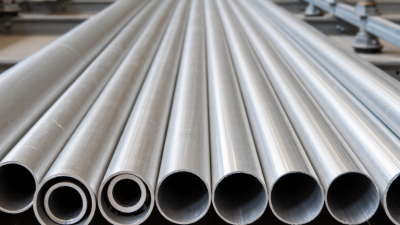
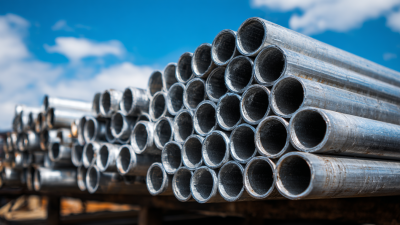
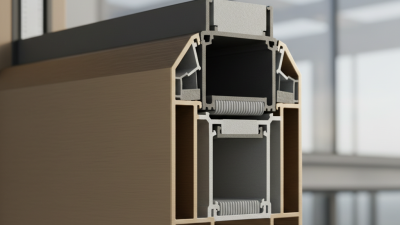
How to Choose Aluminum Scaffolding Pipe for Global Projects?
Choosing Aluminum Scaffolding Pipe for global projects requires more than comparing prices and wall thicknesses. The right selection must match structural loads, working height, climate, transport conditions, and local safety requirements. A lightweight pipe may simplify installation, but it still needs sufficient strength, stiffness, and connection compatibility. Weight alone proves little.
A coastal construction site may expose aluminum components to salt spray, strong winds, and frequent handling. An inland project may face dust, freezing temperatures, or uneven ground. These details affect alloy selection, surface condition, inspection routines, and storage methods. Project teams should request traceable material records, dimensional tolerances, load data, and independent test documentation. They should also confirm whether the product aligns with applicable regional standards and the design approved by a qualified scaffold engineer. Requirements differ across countries. Never assume one certificate satisfies every authority.
Supplier experience matters greatly. Reliable manufacturers can explain alloy grades, extrusion controls, quality inspections, packaging, and replacement procedures. Visit production facilities when the project scale justifies it. Ask how damaged pipes are identified. A catalogue table rarely tells the whole story. That assumption can fail.
Before ordering, compare total project cost rather than unit price. Include freight, customs handling, inspection, storage, assembly time, and expected service life. Trial a small batch when specifications remain uncertain. Record field feedback from installers, inspectors, and site managers. Their observations often reveal issues hidden during office planning. Careful selection protects workers, schedules, and investment while supporting consistent performance across different project locations.
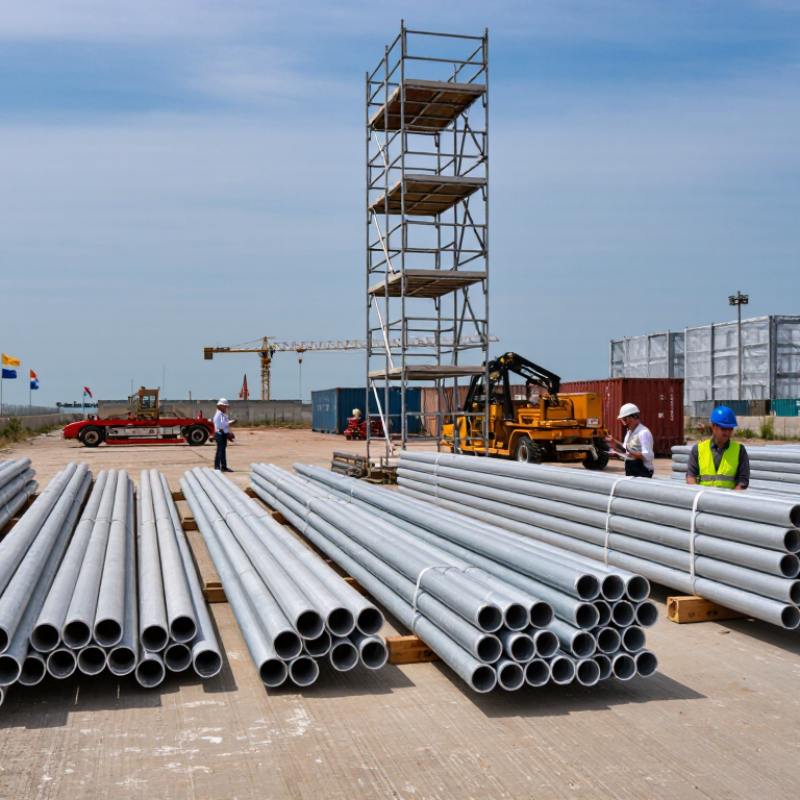
Define Project Loads: OSHA Requires Scaffolds to Support 4× Intended Loads
Choosing aluminum scaffolding pipe for global projects begins with the real working load, not the pipe’s appearance. OSHA requires scaffolds to support their own weight plus four times the maximum intended load. That load includes workers, tools, materials, stored components, and foreseeable movement. A quiet platform can become heavily loaded within minutes.
Write the load estimate before selecting pipe diameter or wall thickness. For example, three workers, a mortar tub, hand tools, and replacement parts may create a concentrated load near one bay. Check both uniform loading and local point loading. Then review compression, bending, deflection, and buckling at every lift. Aluminum is light and practical, but it has a lower stiffness than steel. Long, slender pipes may bend sooner than expected. They may also need closer supports or stronger bracing.
Use traceable material certificates and inspect pipes for dents, cracks, corrosion, and damaged connection areas. Confirm that couplers, base plates, and locking devices match the pipe system. Global projects require another check: OSHA rules may not be the only applicable requirements. Local regulations, engineering codes, site conditions, wind exposure, and temperature can change the design. I have seen load estimates fail because workers counted only people and ignored wet materials. That mistake is easy to repeat. Four times the intended load is a minimum safety requirement, not permission to exceed the engineered capacity. Ask a qualified engineer to verify the complete scaffold design before erection.
Specify Tube Geometry Using EN 755-2 Tolerances and Structural Calculations
How to Choose Aluminum Scaffolding Pipe for Global Projects?
Tube geometry must be specified before any aluminum scaffolding calculation begins. Define outside diameter, wall thickness, length, straightness, and cross-sectional shape. Measure twice. Small deviations matter.
EN 755-2 primarily addresses mechanical properties, not every dimensional tolerance. For reliable procurement, reference its alloy and temper requirements, then apply the relevant EN 755 dimensional tolerance standard. Record permitted limits for diameter, thickness, ovality, and straightness. Do not accept “standard tube” as a complete specification. That phrase creates uncertainty between suppliers and countries.
Structural calculations should use the actual measured geometry, not only nominal dimensions. Calculate area, second moment of area, radius of gyration, and section resistance. Check compression, bending, shear, and Euler buckling for the proposed height and bracing pattern. Connection holes can reduce net section capacity. Local wall buckling may also control thin tubes. Include platform loads, wind actions, impact allowances, and load combinations required by the project location. A clean spreadsheet can still hide weak assumptions. Recheck restraint conditions at every joint. Uncertainty remains, especially when tubes are repeatedly assembled, scratched, or bent slightly during transport. Practical inspection records should link each batch to certificates, measurements, and test results. This discipline improves confidence across different project teams and climates.
How to Choose Aluminum Scaffolding Pipe for Global Projects? - Specify Tube Geometry Using EN 755-2 Tolerances and Structural Calculations
Important standards clarification: EN 755-2 specifies mechanical properties for extruded aluminium products. Dimensional and geometric tolerances for extruded round tubes are normally specified using EN 755-9; EN 12020-2 may apply to certain precision extruded profiles. The purchase specification should therefore state the applicable tolerance standard, alloy temper, product form, and inspection method.
1. Example Aluminum Tube Geometry and Preliminary Structural Properties
Screening comparison for common circular scaffold-tube geometries
| Option |
Outside Diameter
(mm) |
Wall Thickness
(mm) |
Inside Diameter
(mm) |
Cross-Sectional Area
(mm²) |
Second Moment of Area, I
(mm⁴) |
Elastic Section Modulus, W
(mm³) |
Approx. Mass
(kg/m) |
Typical Application Consideration |
| A |
48.3 |
3.2 |
41.9 |
453 |
115,800 |
4,795 |
1.22 |
Lightweight handrails, short-span ledgers, access components |
| B |
50.0 |
4.0 |
42.0 |
578 |
153,800 |
6,150 |
1.56 |
General-purpose members where increased bending stiffness is required |
| C |
60.0 |
4.0 |
52.0 |
704 |
153,600 |
5,120 |
1.90 |
Longer members with a priority on reduced slenderness |
| D |
60.0 |
5.0 |
50.0 |
864 |
193,600 |
6,450 |
2.33 |
Higher axial and bending demand, subject to connection capacity |
| E |
76.1 |
4.0 |
68.1 |
905 |
359,900 |
9,460 |
2.44 |
Long-span beams or high-stiffness temporary structures |
2. Material Selection and Minimum Property Check
Indicative material-property comparison for extruded aluminum tube selection
| Aluminum Alloy and Temper |
Typical Density
(kg/m³) |
Elastic Modulus, E
(GPa) |
Indicative 0.2% Proof Strength, Rp0.2
(MPa) |
Indicative Tensile Strength, Rm
(MPa) |
Corrosion and Fabrication Consideration |
| EN AW-6063-T6 |
2,700 |
69 |
160 |
195 |
Good extrudability and surface finish; suitable for moderate structural demand |
| EN AW-6061-T6 |
2,700 |
69 |
240 |
260 |
Higher strength than 6063-T6; welding can reduce strength in the heat-affected zone |
| EN AW-6082-T6 |
2,700 |
69 |
250 |
290 |
High structural strength; verify extrusion availability, weld performance, and connection details |
3. Tolerance and Procurement Specification
Recommended geometry-control fields for an international purchase specification
| Controlled Item |
Recommended Specification Entry |
Inspection or Design Relevance |
| Outside Diameter |
Nominal value, for example 48.3 mm; tolerance to be selected from the applicable EN 755-9 product table |
Controls fit with couplers, sleeves, clamps, and connection hardware |
| Wall Thickness |
Nominal value, for example 3.2 mm; specify the applicable EN 755-9 tolerance category |
Directly affects area, local buckling resistance, mass, and load capacity |
| Ovality |
Specify the maximum permitted difference between the largest and smallest measured outside diameters |
Important for clamp fit, contact pressure, and realistic section-property calculations |
| Straightness |
Specify the maximum deviation over the agreed measurement length according to the applicable product standard |
Influences initial imperfection and buckling resistance |
| End Squareness |
Specify maximum angular or squareness deviation at cut ends |
Reduces eccentric bearing and uneven load transfer at joints |
| Alloy and Temper |
State the EN AW alloy designation and temper, such as EN AW-6061-T6 or EN AW-6082-T6 |
Ensures that the declared mechanical properties are traceable to the ordered product |
| Length Tolerance |
State cut length and permissible positive and negative deviations |
Controls bay dimensions, splice positions, and erection tolerances |
| Surface Condition |
Define acceptable dents, scratches, die lines, and corrosion staining |
Prevents rejection disputes and identifies damage that may reduce local capacity |
4. Illustrative Structural Calculation for a Pin-Ended Compression Member
Elastic buckling screening using a 2.0 m effective length
| Tube Option |
Elastic Modulus, E
(N/mm²) |
Second Moment of Area, I
(mm⁴) |
Effective Length, L
(mm) |
Radius of Gyration, r
(mm) |
Euler Critical Load, Pcr
(kN) |
Interpretation |
| 48.3 × 3.2 mm |
69,000 |
115,800 |
2,000 |
16.0 |
19.7 |
Highly sensitive to effective length, eccentricity, and connection restraint |
| 50.0 × 4.0 mm |
69,000 |
153,800 |
2,000 |
16.3 |
26.2 |
Improved elastic buckling resistance; verify local and global stability |
| 60.0 × 4.0 mm |
69,000 |
153,600 |
2,000 |
14.8 |
26.2 |
Similar Euler load to 50 × 4 mm because the calculated I values are similar |
| 60.0 × 5.0 mm |
69,000 |
193,600 |
2,000 |
15.0 |
33.0 |
Higher elastic buckling resistance and greater cross-sectional area |
Calculation basis:
A = π/4 × (D² − d²);
I = π/64 × (D⁴ − d⁴);
r = √(I/A);
Pcr = π²EI/(KL)².
The values above assume a uniform circular tube, elastic behavior, a pin-ended member, and an effective-length factor K = 1.0.
Engineering limitation: Euler critical loads are screening values and must not be used as allowable scaffold loads without a complete design check. Final verification should consider EN 1999-1-1 or the governing national aluminium design code, member imperfections, second-order effects, local buckling, connection eccentricity, coupler slip, wind, dynamic effects, platform loads, support conditions, and the required safety factors.
5. Recommended Final Design-Input Checklist
Minimum information to include before approving a tube for global project use
| Design Input |
Required Information |
| Geometry |
Outside diameter, wall thickness, inside diameter, length, ovality, straightness, and end condition |
| Material |
EN AW alloy, temper, product form, heat-treatment condition, and material certificate requirements |
| Loading |
Permanent load, imposed load, wind load, accidental load, erection load, and load combinations |
| Boundary Conditions |
Effective length, joint restraint, base support, splice location, and coupler or clamp behavior |
| Structural Verification |
Compression, bending, combined interaction, local buckling, global buckling, deflection, and connection resistance |
| Quality Control |
Dimensional inspection, alloy verification, temper verification, surface inspection, traceability, and test documentation |
| Project Compliance |
Applicable national scaffold regulations, local building codes, site rules, and client acceptance criteria |
Compare 6061-T6 Aluminum: 2.70 g/cm³ Density and 240 MPa Yield Strength
How to Choose Aluminum Scaffolding Pipe for Global Projects?
Choosing aluminum scaffolding pipe for global projects starts with verified material data. 6061-T6 aluminum has a density of 2.70 g/cm³ and a yield strength of 240 MPa. This balance can reduce lifting effort while providing dependable resistance to permanent deformation. Lower weight matters when crews assemble towers on uneven ground or move components between floors. However, strength values alone do not confirm safe performance. Wall thickness, outside diameter, connections, weld quality, and corrosion exposure also require careful review.
Tips: Request traceable mill certificates and independent test reports. Confirm that dimensions match the engineering drawings. Inspect weld zones for cracks, distortion, or heat damage. Calculate expected loads, including workers, tools, wind, and uneven support. Check regional scaffolding requirements before shipment. Climate matters too. Coastal humidity and frequent temperature changes may affect maintenance schedules.
In practical projects, experienced supervisors compare the pipe’s strength-to-weight ratio with transport limits and assembly methods. A lighter section may improve productivity, but excessive weight reduction can reduce stiffness and increase movement. That trade-off deserves attention. I have seen teams focus on the 240 MPa figure and overlook connection behavior. That mistake is easy to make. A reliable selection combines laboratory data, site conditions, inspection records, and competent engineering judgment. Test-fit samples can reveal problems that spreadsheets miss.
Verify Connections, Bracing, and Platform Loads Against EN 12811-1 Criteria
How to Choose Aluminum Scaffolding Pipe for Global Projects?
Aluminum scaffolding pipe selection should begin with the connection system, not the metal weight. EN 12811-1:2003 requires temporary works to resist service loads, wind effects, and instability. Check whether couplers lock firmly under repeated assembly. A slight gap can reduce load transfer. It happens on busy sites.
Bracing deserves equal attention. Install diagonal braces according to the calculated bay length, height, and wind exposure. Do not assume a lightweight frame needs less restraint. The standard defines platform load classes from 0.75 to 6.0 kN/m². Match the selected class with workers, tools, stored materials, and moving loads. A 1.5 kN/m² platform may fail the project brief when materials accumulate. Verify every deck, ledger, and transom.
Industry data supports this caution. The U.S. Occupational Safety and Health Administration reports about 4,500 scaffold-related injuries and 50 deaths annually. The Health and Safety Executive recorded 50 fatal falls from height in Great Britain during 2023/24. These figures are not design calculations, but they reveal the consequences of weak controls. Request structural calculations, connection test evidence, and inspection records before shipment. Recheck them after local assembly. I would also question identical layouts across countries; terrain, wind, access, and workmanship rarely match.
Select Global Compliance Documents: EN 10204, OSHA, and AS/NZS 1576
Choosing aluminum scaffolding pipe for global projects requires more than checking diameter and wall thickness. The compliance file matters just as much. EN 10204 documents identify the inspection level, material chemistry, mechanical results, and production traceability. For critical orders, request a 3.1 inspection certificate, not only a supplier declaration. Match the heat number to each bundle. This small detail can prevent expensive disputes.
OSHA’s scaffold guidance estimates about 4,500 injuries and 50 deaths annually from scaffold-related incidents in the United States. The Bureau of Labor Statistics also reported more than 800 fatal falls to lower levels in 2023. These figures show why 29 CFR 1926 Subpart L should be reviewed before shipment. Check load capacity, platform width, access, guardrails, tie patterns, and competent-person inspections. AS/NZS 1576 adds requirements for scaffold design, components, erection, and use in Australia and New Zealand. One certificate cannot prove compliance with every jurisdiction. A tidy document pack may still hide an unsuitable alloy or weak connection. That deserves reflection.
Tips: Build a project-specific compliance matrix before purchasing. List EN 10204 certificates, alloy and temper, weld procedures, dimensional tolerances, load calculations, and inspection records. Ask for independent testing when the project is high-risk. Keep translations controlled. Field teams often need simple labels showing tube grade, batch number, and maximum permitted use.