Leave Your Message

What Are the Top Aluminum Handle Extrusions in 2026?

Aluminum Handle Extrusions are entering 2026 with a practical challenge: buyers want lighter handles, clean finishes, and reliable performance without excessive cost. The International Aluminium Institute’s 2022 outlook projects global aluminum demand could rise nearly 40%, reaching about 119 million tonnes by 2030. That growth makes extrusion design more important, but market forecasts do not tell buyers which profile fits a cabinet, sliding door, appliance, or commercial fixture.

Material choices have real consequences. The Aluminum Association reports that recycling aluminum uses about 95% less energy than producing primary aluminum. The Institute’s Secretary-General, Miles Prosser, has emphasized aluminum’s role in the transition to a lower-carbon economy. For handle designers, that broader point meets a very specific detail: a thin-wall profile must still feel firm in the hand, hold its finish, and suit its mounting method. Small differences matter.

This guide compares leading extrusion styles for 2026, including recessed pulls, edge profiles, and continuous-length handles. It considers profile geometry, alloy and temper, surface treatment, installation, and likely application. A sleek handle can look right in a rendering and feel wrong on a heavy door. That is easy to overlook. No single extrusion is best for every project; cost, grip, fabrication limits, and the supplier’s tolerances all deserve a closer check.
What Are the Top Aluminum Handle Extrusions in 2026?

What Aluminum Handle Extrusions Are and How They Are Made

Aluminum handle extrusions are profiles formed by pushing heated aluminum through a shaped steel die. The die sets the cross-section: a slim pull, a recessed grip, or a channel with fixing slots. One continuous length can become many handles after cutting and machining. The shape is not the whole story. Alloy choice affects strength, surface finish, and how readily the profile can be formed.

Production starts with a solid aluminum billet warmed until it can flow under pressure. A hydraulic press forces it through the die. The profile is cooled, straightened, and cut to length. Some designs also need holes, end cuts, or tapped features. Small variations matter. Sudden changes in wall thickness can disrupt metal flow, causing distortion or uneven edges. Die design and process checks need to work together.

After extrusion, profiles may be aged to improve strength, then anodized, powder-coated, or left with a mill finish. Each option affects appearance and wear, so inspect samples under the lighting where the handles will be used. A matte surface can hide fingerprints, but may feel rougher than expected. Fit matters too. Hand feel, corner radius, and installation clearance deserve a physical trial before production quantities are fixed. I would not judge comfort from a drawing alone.

Which Aluminum Handle Extrusion Profiles Stand Out in 2026

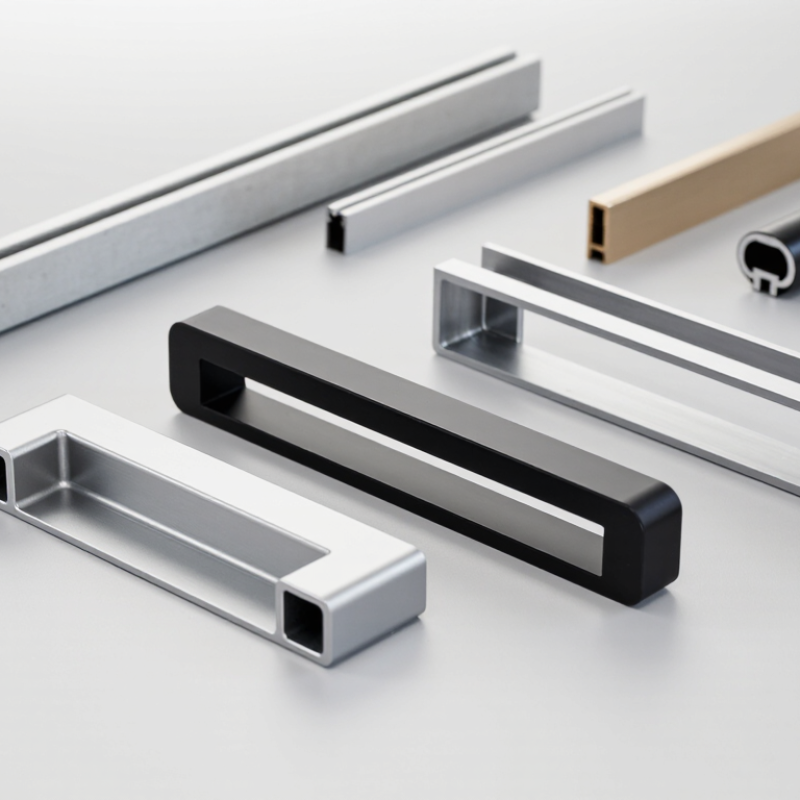
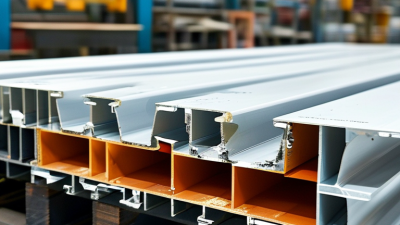
In 2026, the standout aluminum handle extrusion profiles are those that balance grip, strength, and easy installation. Rounded tubular profiles feel comfortable in the hand and suit frequently opened cabinets or equipment doors. Recessed and edge-pull profiles keep the face clean, especially on sliding panels where a projecting grip could catch. For heavier doors, a wider channel with a reinforced mounting surface can spread fastening loads more evenly. Profile names alone tell little; wall thickness, corner radius, and mounting method matter just as much.

Tips: Check the extrusion against the actual panel thickness before ordering. Run a gloved hand along cut edges, and inspect how screws sit in the channel. A sample section helps reveal sharp corners and awkward finger clearance. Small details matter.

Integrated T-slot profiles are useful when accessories or adjustable fittings may be added later. Their flexibility can be helpful, though the extra grooves may collect dust and complicate cleaning. Anodized finishes often provide a consistent appearance, while powder-coated surfaces offer more color options; either finish can show wear at busy contact points. There is no single best profile. A slim edge pull may look elegant, yet feel cramped on a wide drawer. That trade-off is easy to miss on a drawing. Judge the handle with the intended user, panel, and installation conditions in mind.

What Are the Top Aluminum Handle Extrusions in 2026? - Which Aluminum Handle Extrusion Profiles Stand Out in 2026

Profile comparison: dimensions are indicative design ranges, not universal standards. Final dimensions, load capacity, and finish should be confirmed against the specific product design and application.

Profile type Typical section and size range Common alloy and temper Typical finishes Typical installation Where it stands out
Recessed channel pull U- or C-shaped grip channel; commonly about 20–40 mm deep, with length selected to suit the door or drawer. 6063-T5 or 6063-T6 Clear or colored anodizing; powder coating Surface-mounted or integrated into a routed panel edge A low-profile grip for cabinetry, sliding doors, and clean-front designs.
Edge-pull profile Slim L- or hooked section; often designed for a panel edge around 18–25 mm thick, with a grip lip approximately 15–30 mm wide. 6063-T5 or 6063-T6 Anodizing; powder coating; mill finish for further processing Clipped, screwed, or bonded to a panel edge, depending on the design Adds a discreet grip to cabinet doors and drawers without a projecting handle.
J-pull / integrated finger pull Continuous J-shaped or hooked grip formed into the panel or extrusion; opening dimensions are set by the panel and grip design. 6063-T5 or 6063-T6 Anodizing; powder coating; brushed decorative finish Integrated into a cabinet front or fitted as a continuous rail Provides a handle-free appearance and a consistent grip along a door or drawer.
Bar-pull extrusion Solid-looking or hollow rectangular, oval, or rounded section; a common cross-section is roughly 12–30 mm wide and 15–40 mm deep. 6063-T5 or 6063-T6; 6061 may be specified where higher strength is needed Anodizing; powder coating; mechanical brushed finish Fixed with end supports, through-fasteners, or concealed brackets A versatile option for cabinets, appliances, furniture, and equipment enclosures.
T-slot / modular grip profile Extruded rail with one or more T-slots; common modular frame systems use nominal 20, 30, or 40 mm profile series. 6063-T5 or 6063-T6 Usually mill finish or clear anodizing; other anodized colors may be available Assembled with compatible slot nuts, brackets, and fasteners Useful when the handle also needs to serve as a modular frame or mounting rail.
Heavy-duty equipment handle Reinforced hollow or multi-cavity section; wall thickness and overall section are determined by span, mounting points, and load requirements. 6061-T6 or 6063-T6, selected to meet design requirements Anodizing; powder coating; mill finish for fabrication Bolted through reinforced mounting areas or secured with end brackets Designed for equipment doors, access panels, and applications requiring a more robust grip.

How Alloy, Shape, and Finish Affect Handle Performance

What Are the Top Aluminum Handle Extrusions in 2026?
How Alloy, Shape, and Finish Affect Handle Performance

A handle’s alloy sets the balance between strength, formability, and surface quality. For intricate profiles and a clean anodized appearance, 6063 is often a practical choice. Where higher strength matters, 6061 may fit better, though complex shapes can be harder to extrude. Check the supplier’s temper and mechanical-property data; alloy numbers alone do not tell the whole story. Small details matter.

Shape changes how a handle feels under load. A hollow section can reduce weight, while internal webs help limit flex. A broad grip may feel comfortable, but thin walls can dent or twist if loads concentrate around screw holes. Rounded edges also matter: sharp corners can make a handle unpleasant to hold. Prototype the actual profile, fasteners, and mounting surface. A drawing cannot reveal every awkward grip.

Finish affects wear, appearance, and fit. Anodizing forms a protective oxide layer and suits exposed aluminum, while powder coating adds color and can disguise minor surface variation. Both require attention to coating thickness near slots and mating parts. The International Aluminium Institute’s recycling guidance reports that recycled aluminum typically requires about 5% of the energy used for primary production. That figure supports recycled-content choices, but it does not guarantee identical performance. Ask for traceable alloy, temper, and finish specifications. Real use can still surprise you.

What Are the Top Aluminum Handle Extrusions in 2026?

Typical minimum tensile properties of common extrusion alloys and tempers

6061-T6 offers higher strength, while 6063-T5 and 6063-T6 are commonly chosen for their extrusion suitability and surface finish. These representative minimum values can vary by product dimensions and applicable specification. Handle profile geometry affects stiffness and grip; anodizing or powder coating can improve surface protection and appearance, but does not replace sound alloy and temper selection.

Where Leading Aluminum Handle Extrusions Are Used

Aluminum handle extrusions appear in kitchens, offices, retail fixtures, and industrial equipment because they combine a firm grip with a clean, continuous profile. On cabinet doors, recessed or edge-mounted handles keep narrow walkways clear and reduce snagging on clothing. A softly radiused edge feels better during repeated use. Small details matter.

Commercial refrigerators and display cases often use long, integrated pulls that remain easy to grasp with damp hands. In offices, extruded handles suit storage walls and sliding partitions, where consistent lengths create an orderly look. Transport interiors use lightweight profiles on lockers, seat compartments, and service panels, but vibration makes secure fastening essential. The profile alone cannot solve a weak mounting point.

For machinery enclosures, designers may choose deeper sections that leave room for gloved fingers. Healthcare and laboratory cabinets can benefit from smooth, easy-to-wipe surfaces, though joints and end caps still need careful attention. Finish choice also changes performance: textured surfaces can disguise small marks, while polished finishes show fingerprints quickly. That trade-off is easy to overlook. I would check grip comfort, mounting space, cleaning needs, and load expectations against a real sample before specifying a profile. A drawing can look convincing. The hand may disagree.

How to Select an Extruded Aluminum Handle for Your Application

Selecting an extruded aluminum handle starts with its job, not its profile name. A cabinet pull needs comfortable finger clearance; an equipment handle may need to carry repeated loads. Measure the mounting span, grip depth, and available space before comparing shapes. Fit matters.

Check the alloy and temper against expected loads and manufacturing needs. Common architectural alloys can offer a useful balance of finish quality and formability, but the right choice depends on wall thickness, span, and support. Ask for load data or test a representative assembly; profile strength alone does not describe how screws, brackets, or thin panels will perform. Test it.

The setting matters, too. A handle near moisture or cleaning chemicals may need a suitable coating or anodized finish, while a dry indoor application may not. Inspect sample edges and cut ends, where burrs or sharp corners can spoil an otherwise comfortable grip. Confirm tolerances, finish consistency, and fastening access with the supplier before production. One detail is easy to overlook: a deep profile can look substantial yet feel awkward in a small hand. A quick mock-up, even from a short sample, can reveal that problem before the order is fixed.